
Epoxy vs Polyaspartic vs Polyurea: Picking a Garage Coating in Clovis
Epoxy Floors Field Clovis sorts epoxy, polyaspartic, polyurea and hybrid garage coatings into plain language and tests each one against a Clovis garage: 97°F July afternoons, near-freezing January mornings, sun through an open door and slabs from the newer northeast tracts.
Bookings aren't open yet. Leave your name and number; your message is recorded, and you'll get one message when a local installer is available.
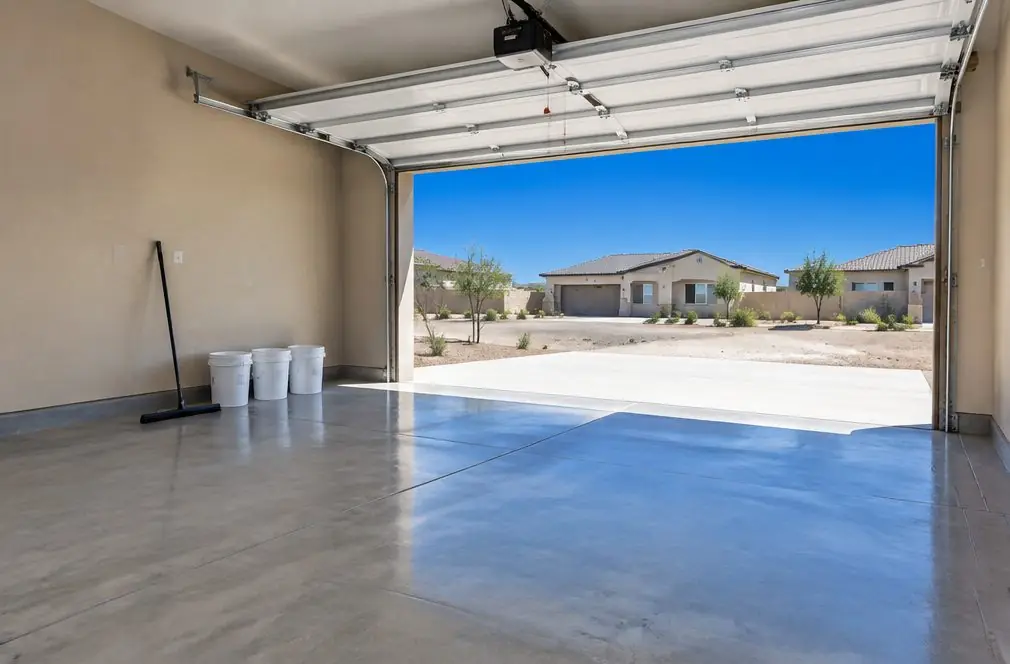
The floor as it starts
 Illustration
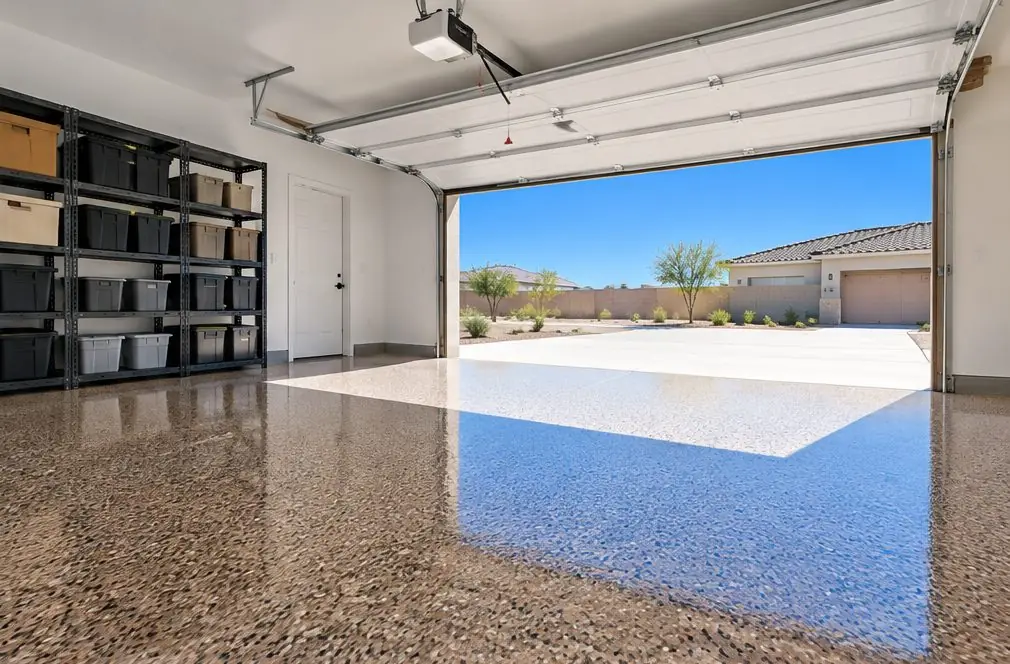
The finished floor (illustration)
 Illustration
Four names, two resin families
Most of the confusion on a quote is vocabulary. Epoxy is a two-part resin: a base and a hardener are mixed on site and cure into a hard film, and the mix stays workable for a fairly long time. Polyurea is a different resin family that reacts fast. Polyaspartic belongs to that family and is formulated to react a little more slowly, which gives an installer some minutes to spread it. A comparison of "polyaspartic against polyurea" is mostly a comparison of close relatives.
The fourth name, the hybrid, describes how the layers are stacked rather than a new chemistry: an epoxy primer and base coat for grip on the ground slab, color flake broadcast into the wet base, and a polyaspartic or polyurethane clear coat on top. Epoxy does the gripping; the clear coat takes the sun and the scuffs.
Reading a quote: "polyaspartic floor" can mean a complete polyaspartic system or only the clear coat of a hybrid. The line items show which one is priced.
A valley year on a garage slab
Clovis swings further than most coastal cities. The July mean high is about 97°F and the August mean high about 95°F, while the January mean low sits near 32°F. Both ends of that range affect a coating job.
- Hot afternoons. Fast-cure products have less working time when the slab is warm. Installers answer with early starts, small mixed batches and shade or a cooled slab, and they plan the final coat for the cooler hours.
- Cold mornings. In winter the slab can sit near freezing at dawn. Primers and base coats have a minimum surface temperature on the data sheet, and cure slows when it is cold, so a winter job often starts later in the day.
- Open-door sun. Epoxy can amber (yellow) in sunlight, which shows where a door stays open and a strip of sun crosses the floor each afternoon. Polyaspartic and polyurethane top coats are generally more UV-stable.
- Valley dust. A sealed floor is easier to sweep and easier to keep clean than bare concrete, whichever system is chosen.
What each layer does
The table describes general tendencies; a particular data sheet can differ.
| Epoxy | Polyaspartic or polyurea | Hybrid stack | |
|---|---|---|---|
| Usual job | Primer and base coat | Clear coat or a full system | Epoxy base, fast clear coat |
| Working time on a hot day | Longest of the three | Short | Base is relaxed, clear coat is short |
| Behavior when cold | Cure slows noticeably | Often cures at lower temperatures than epoxy | Depends on the layer |
| Sun at an open door | Can amber over time | Generally UV-stable | Clear coat takes the sun |
| Install pace | Often several days before a car | Many systems finish in one day | Often a day or two |
| Smell while curing | Noticeable | Strong at first | Strong during the clear coat |
Garages smell strongest during the top-coat stage. People and pets stay out until the product's data sheet says otherwise.
Estimator bands for Clovis garages
The estimator on this site prices each system per square foot, installed, on a sound slab. Two sizes are shown: a two-car garage of about 400 square feet and a three-car garage of about 700.
| System | Per sq ft | About 400 sq ft | About 700 sq ft |
|---|---|---|---|
| Solid-color epoxy | $3–$6 | $1,200–$2,400 | $2,100–$4,200 |
| Full-broadcast flake epoxy | $5–$8 | $2,000–$3,200 | $3,500–$5,600 |
| Polyaspartic flake (epoxy base, polyaspartic top coat) | $6–$10 | $2,400–$4,000 | $4,200–$7,000 |
A full polyaspartic or polyurea system is not a separate line in the estimator; the polyaspartic flake line is the nearest. A home-services price guide for Clovis lists $6–$9 per square foot for epoxy floors, which falls between the flake and polyaspartic flake bands. These are market estimates, not quotes.
Three questions that settle it
- Where does the sun land? A garage that stays open for hours with a west or south exposure gains the most from a UV-stable top coat. A garage used mostly for storage, with the door shut, may do well with flake epoxy and a clear epoxy or polyurethane finish.
- How fast does the car need to return? Ask each installer for the data-sheet times for foot traffic and for tires, at the temperature forecast for that week. A cold January morning and a 100°F afternoon give different answers.
- How old is the slab? A slab from a newer tract may be too young or too damp to coat; the guide on moisture testing covers that check, which comes before any choice of system.
The decision is seldom epoxy against polyaspartic as a contest. It is a question of how many layers the garage needs and which one faces the sun.
Where this leads
- Service page: Polyaspartic Garage Floors — The faster-curing, more UV-stable top coat, with a plain look at its short working time in valley heat and a cure timeline to hold an installer to.
- All services and typical prices: epoxy garage floors in Clovis
- More illustrated guides: Epoxy Floor Guides
Check availability and the price range for this setup
Bookings aren't open yet — a typical Clovis range in about 30 seconds.